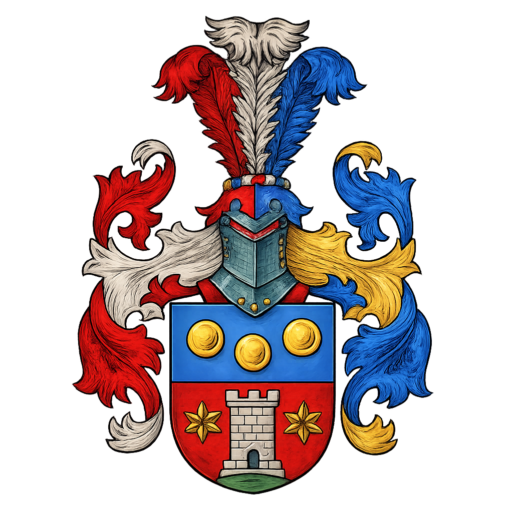


The Arezen Bonadurers.
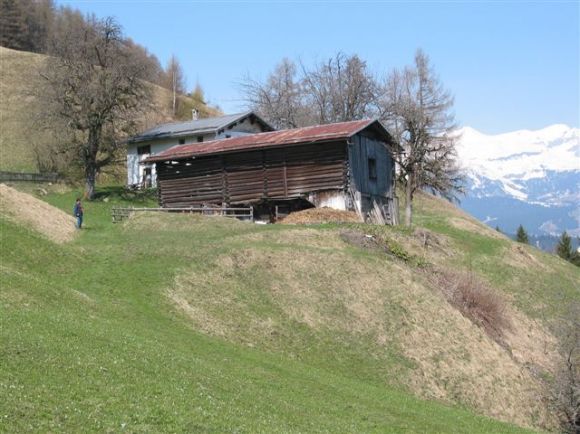
Arezen is a place that appears again and again in the records. In 1607, Martin Bonadurer and his son are mentioned in connection with a legal dispute over a path from the Joos farms to the Allmeini or to the alp — an indication that the Arezen Bonadurers were already independent farmers at that time.
In the plague year 1629, an elderly Bonadurer died in Arezen. Because of the rampant disease in Valendas, Versam and Fan, he could not be buried in the village — he was laid to rest in a meadow between Summergadä and Wintergadä. Likely an ancestor of Clas Bonadurer, mentioned in 1708.
Further evidence appears in 1691: Jöri Bonadurer “from Fan” is granted citizenship at the March assembly in Versam for 180 guilders — a typical process for this far-branching line. And in 1698, Balzer Bonadurer and his brother-in-law Balzer Joos reach an agreement regarding the boundaries of their properties in Arezen.
The Arezen Bonadurers were always a breed of their own — rural, headstrong, with their own rights of way and their own Allmeini.
— From family tradition
By the carving register of 1704 at the latest, the Bonadurers are documented as burgher families in Versam, Arezen and Fan — and in 1711 their settlement in all three localities becomes official.
What remains today?
The old farmsteads in Arezen are still partly in family ownership. Those who hike up the valley will find the field names again on the map — and, with a little luck, a carved “B.” at the fountain.
Setting
Notable figures
+ son
§ 01 · The main line
“In der Mülli” and “im Boda”.
The main line, which can be traced back the furthest, leads to the name-bearers still living in Arezen today: “in der Mülli” and “im Boda”. Their ancestors were repeatedly capable, exceptionally gifted craftsmen — violins were made in the Mülli in Arezen.
The oldest clearly identifiable figure of the main line is:
Around 1600 · Versam
Jos Bonadurer
Mentioned in 1634 as master builder of the church in Versam · Document from 1669 (parchment) from Arezen
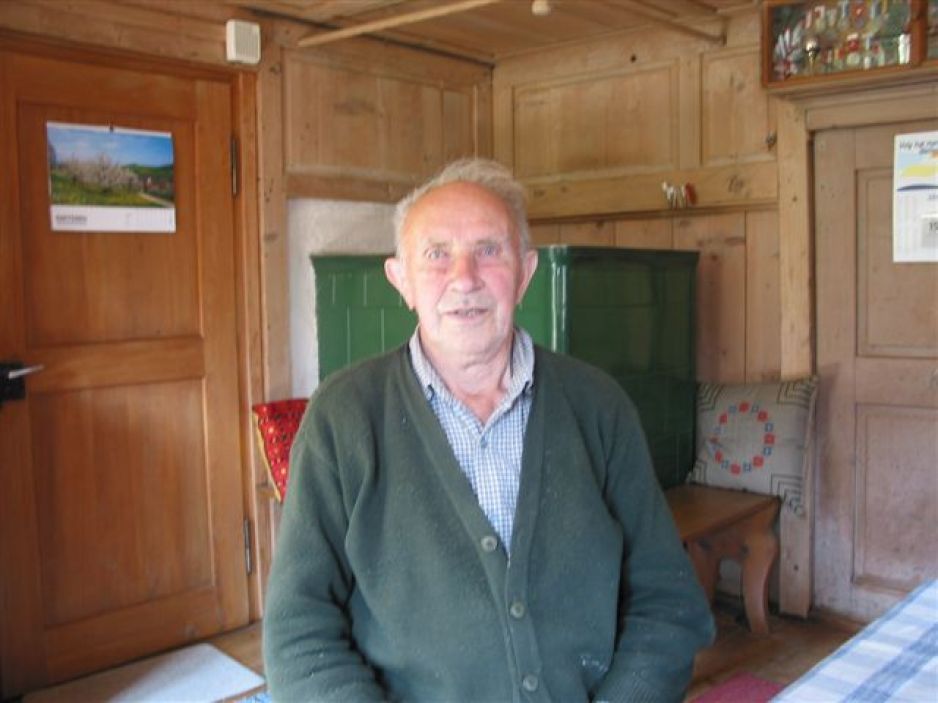
Christian Bonadurer (1914–2008) · Last Bonadurer in Versam
§ 02 · Artisans · 1600–1748
Church builder, woodcarver, church warden.
In 1634, Jos Bonadurer, born around 1600, is mentioned during the construction of the church in Versam as one of the four responsible master builders. From 1669, a fine parchment document has been preserved: Jos Bonadurer, “resident in Voräzen”, sells a farmstead in Mareina — but he himself is still recorded as an adjoining landowner “above”.
His son Johannes, born around 1650, received his training in Munich at a carving or carpentry school. It is possible that Jos sold the Mareina farm to finance his son’s education. Works by Johannes are held in the Rhaetian Museum in Chur.
Master Johannes was followed by his son Master Jos Bonadurer (1678–1748). The pulpit in the neighboring municipality of Valendas also dates from him or from his son Hans (born 1707). Upon his death on April 13, 1748, the local pastor Joh. T. Ulricus wrote in the parish register:
“1748, 13 Aprilis — Master Joos Bonadurer from Arätzen, amicus meus integerrimus (my most sincere friend), was buried in the earth, aged 70 years.”
Pastor Joh. T. Ulricus (Durisch) of Susch · Versam parish register
§ 03 · Family manuscript · 1707–1745
Hans Bonadurer’s chronicle in his own hand.
Church warden Master Hans Bonadurer (born 1707) married Magdalena Joos from Fan, daughter of Marti Jos and Elsa Bonadurer. On a loose sheet, in a “swift, fine and easily legible hand”, he left notes about his family — a rare, moving document from the 18th century:
1707 · 13th Christmonat
“I, Hans Bonadurer, was born into the light of this world”
1718 · October 20
“my wife Magdalena Joosy was born”
1729 · April 10
“my dear mother Ursula Bonadurery, née Nuttly, died (50)”
1734 · March 9
“my wife’s dear father Marty Joos passed away (51)”
1739 · June 18
“I, Hans Bonadurer, was joined in marriage and blessed with my dear wife Magdalena Joosy”
1743 · 12th Christmonat
“the dear Lord God blessed us with a young daughter named Ursulla”
1744 · February 17
“it pleased the dear Lord God to call this dear child back to His grace. May God grant her a joyful resurrection”
1744
“Hans Bonadurer buys from Michel Buchli, Arezen, ‘half of a mill’”
1745 · April 1
“the dear Lord God has gladdened us with a well-formed son, named Joos”
Handwritten notes by Hans Bonadurer · Versam parish registers
The notes end here — do they not leave an impression of believing, devout people?
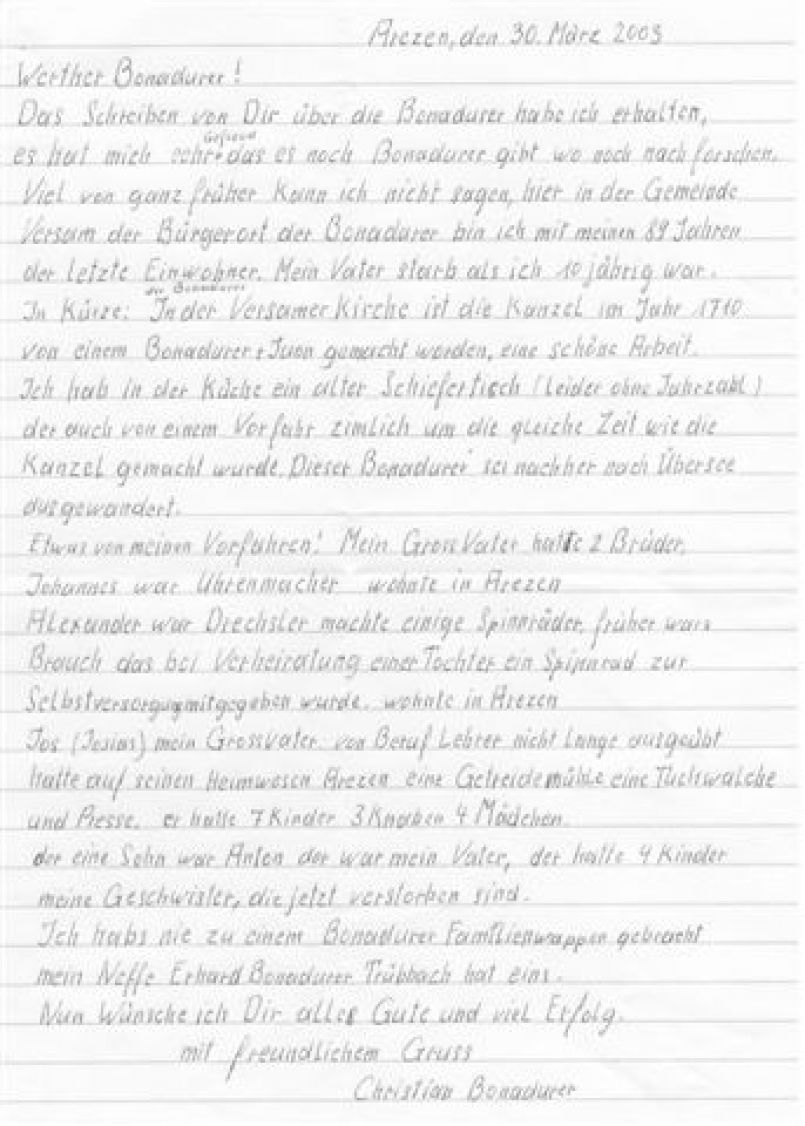
Original letter from Christian Bonadurer to Roland · around 2003
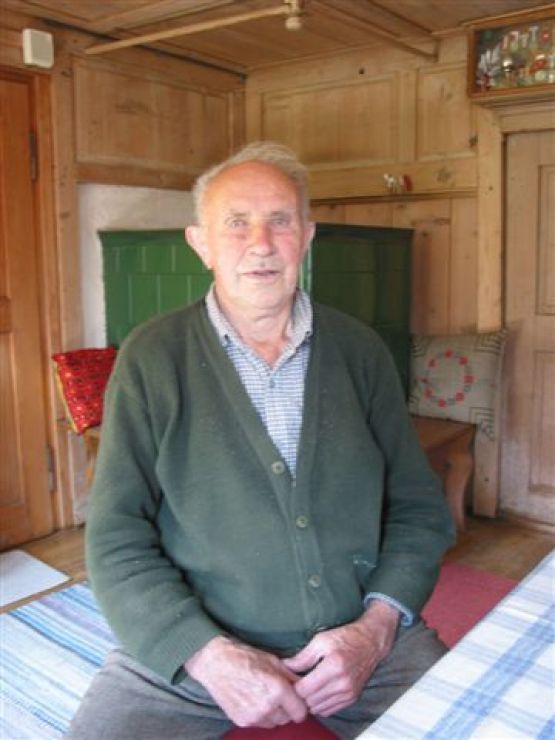
Christian Bonadurer · Versam · c. 2003
§ 04 · Last Bonadurer in Versam
Christian Bonadurer, 1914–2008.
At the age of 89, Christian Bonadurer was the last local name-bearer in Versam — he died in June 2008. He wrote to Roland Bonadurer:
“I received your letter about the Bonadurers, and I was very pleased that there are still Bonadurers who continue to research. I cannot say much about the very early times — here in the municipality of Versam, the place of citizenship of the Bonadurers, at 89 years of age I am the last resident.
In the church in Versam, the pulpit was made in 1700 by a Bonadurer. In the kitchen there is an old slate table — unfortunately without a year — which was also made by an ancestor from about the same period.
My grandfather had 2 brothers: Johannes was a watchmaker and lived in Arezen. Alexander was a turner and made spinning wheels. Jos (Josias), my grandfather, was a teacher — not for long — and had his homestead in Arezen.”
Christian Bonadurer, Versam · Letter to Roland Bonadurer, c. 2003